From Bedside to Breakthrough: Inside UCSF's Neonatology Fellowship
For the smallest and sickest newborns, decisions in the first hours after birth can shape a lifetime.
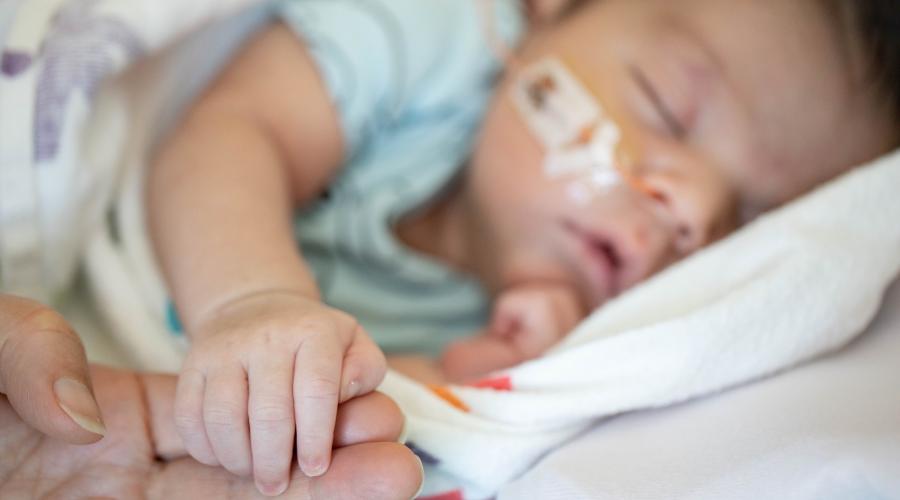
In the Intensive Care Nursery (ICN), keeping a critically ill newborn alive is only the beginning. The deeper challenge – and the one driving modern neonatology – is how to optimize long-term growth and development for even the most fragile patients. For many infants, those answers depend on research still underway.
At UCSF, the Neonatology Fellowship Program is built on a simple but powerful idea: the questions that arise at the bedside should drive the research that transforms care. Directed by Luke Judge, MD, PhD, in the UCSF Division of Neonatology, the program is designed to train physician-scientists who can move seamlessly between the ICN and meaningful scholarly work.
Complete Care at an Integrated Hospital
At the UCSF Benioff Children’s Hospital San Francisco, the Level IV Intensive Care Nursery sits adjacent to the Birth Center, allowing fellows to participate in prenatal counseling, attend high-risk deliveries, and manage ICN cases all within a single, coordinated system.
For families, this continuity means care is not fragmented. For fellows, it creates a deeper understanding of the full arc of neonatal care.
They care for some of the most complex cases, including referrals from across the region and conditions diagnosed through the UCSF Fetal Treatment Center. Fellows can follow families from prenatal consultation through delivery, intensive care, and long-term neurodevelopmental follow-up.
Many patients in the ICN require surgical treatment, and for some critical cases, those surgeries are performed in the ICN itself – allowing fellows to care for the most medically fragile infants alongside pediatric surgical teams. Additional rotations in cardiac critical care, the neurological-intensive care nursery, and the community NICU at Zuckerberg San Francisco General Hospital round out the clinical experience.
“In our program, a fellow interested in brain injury will see its presentation in fetal imaging, how it evolves over weeks to months, and eventually how the child’s development progresses years later,” says Judge. “That firsthand experience is crucial to sharpening research questions and focusing on the most impactful factors.”
Turning Clinical Questions into Discovery
As fellows progress through the three-year program, their schedules shift toward more protected time to provide the structure and freedom to pursue basic science or clinical research, quality improvement, or medical education.
Fellows collaborate with experts across UCSF and partner institutions, with key resources including:
- Newborn Brain Research Institute (NBRI): Advancing the understanding and treatment of neonatal brain injury through translational science
- Cardiovascular Research Institute (CVRI): Investigating critical questions in cardiovascular and cardiopulmonary biology, with over 50 UCSF principal investigators.
- The Initiative for Pediatric Drug and Device Development: Accelerating therapies specifically designed for newborns and children
- UCSF California Preterm Birth Initiative: Addressing disparities in birth outcomes through community-centered research
- Innovative Genomics Institute (IGI): Pioneering genome-editing technologies, including CRISPR-based therapies
- Master's program in Clinical and Epidemiological Research: Formal training that equips fellows to lead clinical and population-level studies
The support doesn't end at graduation. Fellows who transition to faculty receive protected time and departmental resources to sustain their research programs.
"The fellows who thrive here are the ones who show up with an idea and the drive to pursue it," says Judge. "Everything we've built here — the mentorship, the infrastructure, the protected time — exists to turn that drive into impact.”
From Fellowship to Field Leadership
The impact of this model is reflected in the fellows themselves.
"Many of my research questions grew directly out of complex cases we discussed during fellowship — particularly infants treated with therapeutic hypothermia for brain injury following maternal infection and inflammation," says Marie-Coralie Cornet, MD, PhD, who completed her fellowship at UCSF in 2022 and is now faculty in the Division of Neonatology. "UCSF gave me the opportunity to work with leaders in the field, gain rigorous training in clinical research, and ultimately secure NIH funding to investigate how prenatal inflammation contributes to neonatal brain injury."
Cornet's trajectory is part of a broader pattern. Over the past five years alone, UCSF neonatology fellows have earned:
- Five Pediatric Scientist Development Program (PSDP) awards, supporting the transition to independent research careers
- Three NIH K08/K23 awards, a critical step toward securing R01 funding
- Four California Association of Neonatologists awards for outstanding fellow scholarly work
- Three UCSF Department of Pediatrics Grumbach awards for excellence in translational science
Building the Future of Neonatal Care
The UCSF Neonatology Fellowship Program trains physician-scientists to do what neonatal medicine demands: care for the most vulnerable patients while generating ways to advance that care. For families facing the uncertainty of a critical neonatal diagnosis, the breakthrough that transforms their child’s future may be driven by a fellow training here right now.
Learn more about the UCSF Neonatology Fellowship Program and read about how the Division of Neonatology is advancing care for the most vulnerable newborns.